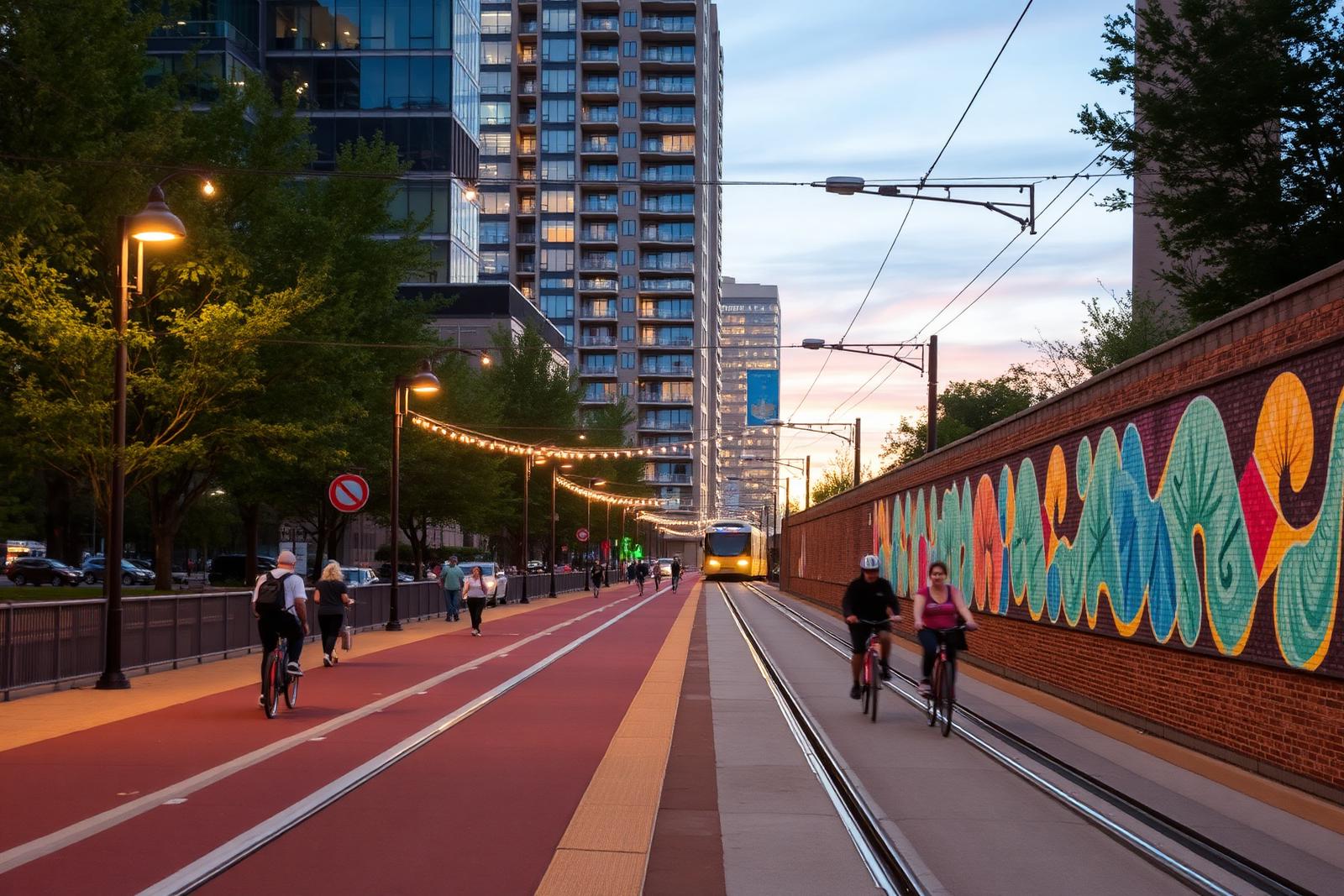
South End Sub-District
Wilmore
One of Charlotte's oldest neighborhoods, a historic streetcar suburb of modest early-1900s homes undergoing gradual gentrification.
—
Profiled buildings
—
Profiled venues
Also called
Wilmore neighborhood, one of Charlotte's oldest streetcar suburbs
Walkable
Walkable within the neighborhood's
Boundaries
Where Wilmore begins and ends
West of South Boulevard, roughly bounded by Tremont Avenue, South Boulevard, and the rail corridor near the Scaleybark station, extending toward Clanton Road.
Wilmore predates most of South End's modern redevelopment; it developed in the early 1900s as a streetcar suburb for mill workers and has retained much of its original small-lot, close-set housing pattern. Bungalows and shotgun-style houses line narrow streets that feel distinct from the mixed-use blocks just to the east.
Over the past two decades, Wilmore has seen steady reinvestment, with renovated bungalows and infill construction gradually replacing some of the neighborhood's older, more modest housing stock. That process has been more incremental than South End's wholesale redevelopment, and much of the neighborhood's historic character remains visible.
Wilmore Park anchors the neighborhood's western edge and remains a genuine neighborhood amenity rather than a redevelopment showpiece, with ballfields and green space used by longtime residents and newcomers alike.
Because it sits just west of South Boulevard and the Scaleybark light rail station, Wilmore residents can reach South End's restaurants and transit on foot or by a short bike ride, even though the neighborhood itself remains predominantly single-family in character.
Housing stock
- Early-1900s bungalows and shotgun-style single-family homes
- A growing share of renovated or rebuilt homes on original lots
- Small-scale infill townhomes on some blocks
- Limited multifamily development compared with South End's commercial core
Anchors
- Wilmore Park
- Scaleybark light rail station
- Historic bungalow-lined streets
- Proximity to South Boulevard's restaurants and breweries
Best for: Buyers seeking historic single-family character within walking distance of South End's amenities.
Walkability: Walkable within the neighborhood's grid, with a short walk or bike ride to South Boulevard's retail and the light rail.
Compare
Other South End sub-districts
Primary Sources
- City of Charlotte
- Mecklenburg County POLARIS 3G parcel viewer
- City of Charlotte Unified Development Ordinance (2023)
- Charlotte Area Transit System — LYNX Blue Line
Figures are compiled from public records and primary sources and are reviewed periodically. Conditions in South End change quickly — verify anything you intend to rely on.
The Local Network
Four firms we recommend by name
South End rewards specialists. These are the people we send readers to for building, buying, designing, and wiring a home in this district — read our coverage, or go straight to their studios.
Custom Builder
Peters Custom Homes
Estate-grade custom construction and infill homes across Charlotte, including 28203 teardowns and full gut renovations.
peterscustomhomes.com Our coverage →Real Estate
Peters & Associates
Representation for buyers and sellers in South End's condo, loft, and townhome market — plus off-market building intelligence.
yourleaderinluxury.com Our coverage →Interior Design
Emerald & Oak
Full-service interior design and furnishing for hard-loft volumes, tower residences, and new construction.
emeraldoakdesign.com Our coverage →Smart Home & AV
Peters Audio Video
Networking, lighting control, media rooms, and whole-home audio engineered for concrete-and-steel construction.
petersaudiovideo.com Our coverage →Related
Continue Through the Guide
living
Brunch in South End
Where weekend mornings actually happen, and how to avoid the wait.
Read →living
Happy Hour in South End
Taprooms, rooftops, and restaurant bars between 4pm and 7pm.
Read →buying
South End Real Estate
How Charlotte's densest submarket actually trades — price bands, absorption, and risk.
Read →buying
South End Buildings & Communities
Every major condo, loft, apartment, and townhome community, one directory.
Read →