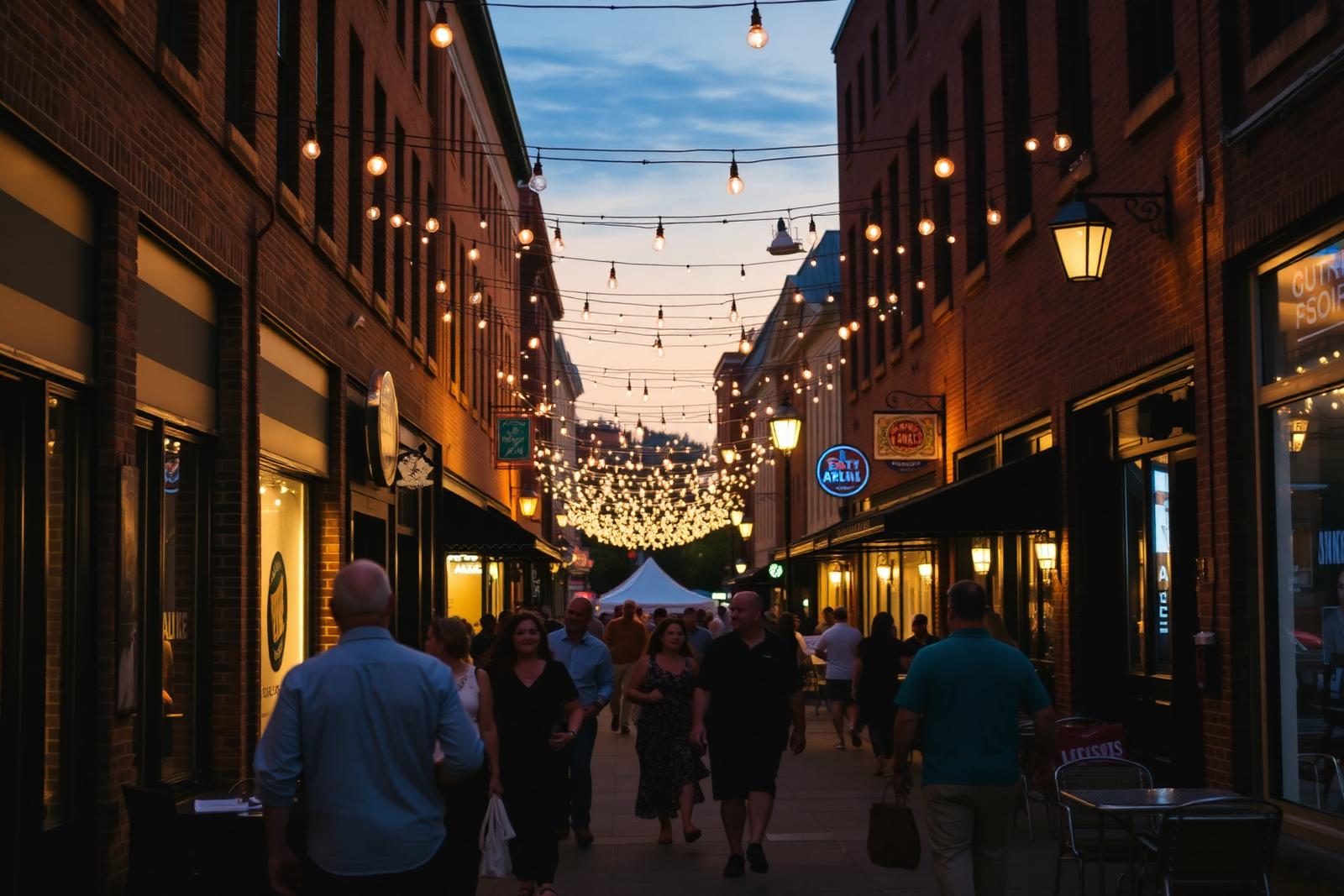
Pedestrians on a South End Charlotte street with shops and string lights

Logistics

Where to Park in South End, Charlotte

Parking is the single most common friction point for anyone visiting South End, and the single most negotiated line item for anyone living here. Supply is largely structured, mostly paid, and priced by demand rather than by distance.

Mostly structured

Dominant supply

Paid by default

Pricing

Thu–Sat evenings

Peak demand

LYNX Blue Line

The alternative

The short answer

Most South End parking is inside private decks attached to apartment, condo, and office buildings, with a smaller set of surface lots and a thin band of metered on-street spaces along Camden Road, Tremont Avenue, Bland Street, and the cross streets connecting to South Boulevard. Nearly all of it is paid, and most decks are operated by third-party vendors with app-based or gated payment.

If you are visiting for dinner or a brewery, plan on a deck or a lot rather than a street space, especially after 6 p.m. Thursday through Saturday. If you are moving here, treat the parking arrangement as a lease or purchase term to negotiate, not an afterthought.

Deck parking, and what it actually costs

Structured decks under and beside the corridor's larger buildings carry the bulk of demand. Hourly rates step up sharply in the evening, and many decks convert to flat event pricing when nearby venues are busy. Validation exists but is inconsistent — some restaurants and retailers validate for a limited window, others do not participate at all, and the same deck may honor validation on one level and not another.

Check the posted operator signage before you leave the car. Rates, enforcement, and towing policy are set by the operator, not by the city, and they vary deck to deck within the same block.

  • Confirm the operator and payment method at entry
  • Ask whether the restaurant validates before you park
  • Expect flat event pricing on busy evenings
  • Photograph the level and space number — decks look alike

On-street and metered parking

On-street supply exists but is limited and time-restricted through most of the district. Metered spaces turn over quickly in daytime retail hours and fill first in the evening. Residential streets on the Wilmore and Sedgefield edges are permit-sensitive in places, and parking there to avoid a deck fee is the fastest way to collect a citation.

Enforcement is active in the core blocks. Read the sign above the space rather than the one at the end of the block; restrictions change mid-block more often than drivers expect.

Resident parking in apartments and condos

Almost every residential building here assigns parking by ratio rather than by unit. One space per apartment is common, a second space is frequently a waitlist item, and some buildings unbundle parking from rent entirely so the monthly figure you compare online is not the figure you pay.

For condos, deeded versus assigned versus leased parking is a material difference at resale. Deeded spaces convey with the unit; assigned spaces may be reallocated by the association; leased spaces disappear when the lease ends. Verify which one a listing means before assuming a space belongs to the home.

  • Ask whether parking is bundled or priced separately
  • Ask the ratio, not just whether parking is available
  • For condos, confirm deeded vs assigned vs leased
  • Ask about guest parking rules and overnight limits

Guest, event, and weekend parking

Guest parking is the most commonly under-disclosed detail in South End buildings. Some communities issue a limited number of visitor passes, others send guests to public decks, and a few have no guest provision at all. On event nights near the trail's busiest blocks, nearby decks price up and fill quickly.

The practical workaround most residents adopt is to stop driving inside the district. The Rail Trail connects most of the corridor on foot, and the Blue Line handles the Uptown trips that would otherwise involve paying twice for a space.

The alternative: not parking at all

South End is one of the few Charlotte districts where arriving without a car is genuinely easy. Blue Line stations serve the length of the corridor, park-and-ride capacity exists at outlying stations, and rideshare drop-offs are routine along Camden Road and South Boulevard.

For a night out, boarding the train at an outer station is frequently faster and cheaper than circling for a deck space and paying event pricing at the end of it.

At a glance

What matters most here

Decks dominate

Most supply is private, structured, and operated by third-party vendors.

Validation is inconsistent

Ask the venue before you park; policies differ deck to deck.

Ratios, not spaces

Residential parking is allocated by ratio and often priced separately from rent.

Rail beats circling

The Blue Line is usually faster than hunting a space on a weekend evening.

Answered

Questions & Answers

Where do you park in South End Charlotte?

Primarily in structured decks attached to residential, office, and mixed-use buildings, plus a smaller number of surface lots and limited metered on-street spaces along Camden Road, Tremont Avenue, and the cross streets to South Boulevard.

Source: Mecklenburg County Park & Recreation

Is parking free in South End?

Rarely. Most decks and lots are paid, and metered on-street spaces are time-restricted and enforced. Free parking, where it exists, is usually short-window retail parking tied to a specific tenant.

Source: Mecklenburg County Park & Recreation

Do South End apartments include parking?

Often at a ratio of about one space per unit, but many buildings unbundle parking and charge for it monthly. Confirm the ratio, the price, and second-space availability before signing.

Source: Mecklenburg County Park & Recreation

Where should visitors park for restaurants and breweries?

A public deck near the block you are visiting, arriving before peak evening hours. Ask whether the venue validates, and expect flat event pricing on busy nights.

Source: NC Alcoholic Beverage Control Commission — permitted breweries

Is there park-and-ride for South End?

Yes — outlying LYNX Blue Line stations offer park-and-ride capacity, which many residents and visitors use to reach the district without parking inside it. Confirm current lot availability with CATS.

Source: Charlotte Area Transit System — LYNX Blue Line

Primary Sources

Figures are compiled from public records and primary sources and are reviewed periodically. Conditions in South End change quickly — verify anything you intend to rely on.