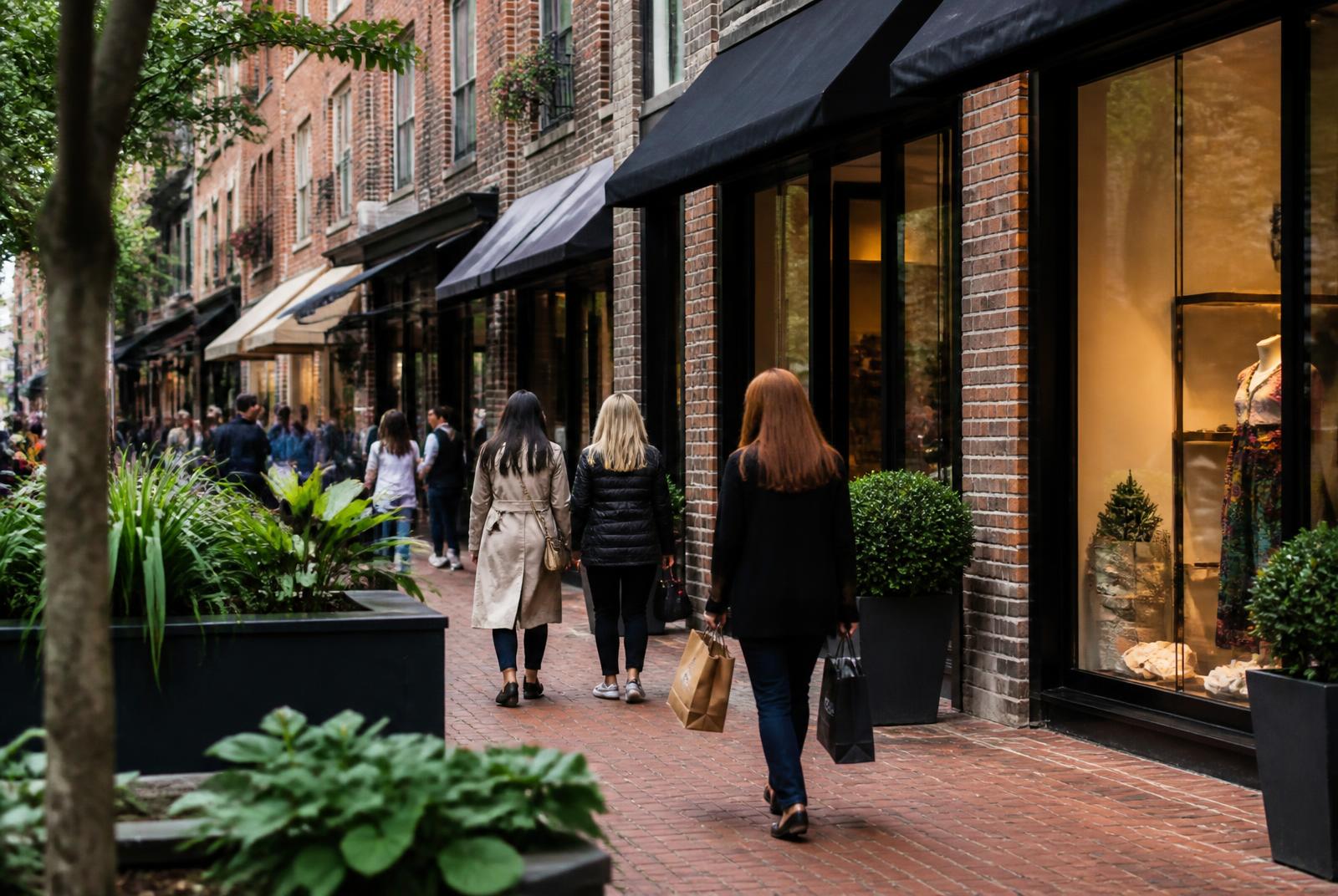
Boutique storefronts along a South End Charlotte shopping block

Shopping Guide

Where and How South End Shops

South End's retail scene is built on independent boutiques and design-forward showrooms tucked into converted mill space, more curated than comprehensive.

Boutique-heavy

Independent retail over big-box

Mill-block retail

Converted industrial storefronts

Design cluster

Home and design showrooms

Limited grocery

Supplemented by delivery

Independent boutiques

South End's shopping identity centers on independent boutiques rather than national chain retail, with clothing, home goods, and specialty shops occupying storefronts along the district's main corridors and inside the converted mill buildings. These businesses tend to turn over more than a fixed shopping-center roster, which keeps the scene feeling current.

This format rewards browsing over destination shopping — visitors and residents alike tend to discover new shops by walking the neighborhood rather than by seeking out a specific address, which fits South End's broader walkable character.

The tradeoff is that South End is not the place for guaranteed one-stop shopping; residents needing a specific item reliably in stock often supplement neighborhood boutiques with larger retail outside the district.

Design and home showrooms

The neighborhood has become something of a hub for home design and furnishings showrooms, benefiting from both the large volume of new residential construction nearby and the character of the mill buildings themselves, which suit showroom-style retail well.

These showrooms range from furniture and lighting to interior design studios, and they serve both South End's own residents furnishing new units and a broader Charlotte clientele drawn to the concentration of design-focused businesses in one area.

For anyone furnishing a new build or renovation nearby, this cluster is one of the more practical reasons to shop specifically in South End rather than elsewhere in the city.

Mill-block retail

The district's restored textile mills are the physical anchor of its retail identity, with exposed brick and timber interiors housing a mix of boutiques, restaurants, and design businesses under one roof or across a connected block. This format concentrates a meaningful chunk of South End's retail into a few walkable clusters.

These mill blocks tend to draw the heaviest foot traffic in the neighborhood, particularly on weekends, and function as much as a destination in themselves as a place to run a specific errand.

Because these buildings are historic conversions, tenant mixes shift over time as leases turn over, so the specific lineup of shops in any given mill block is worth checking rather than assuming it's static.

Groceries and everyday needs

Grocery shopping is the clearest gap in South End's retail mix relative to a fully self-contained neighborhood. A handful of grocery options serve the district directly, generally better suited to small or frequent trips than a full weekly stock-up.

Many residents supplement in-neighborhood grocery options with delivery services or an occasional drive to a larger supermarket just outside South End's boundaries, treating the neighborhood stores as a convenience layer rather than a complete solution.

Pharmacy, hardware, and pet-supply basics are more consistently available within the neighborhood, rounding out the everyday-needs side of South End's retail mix even where full grocery coverage falls short.

Seasonal and pop-up retail

Beyond its permanent storefronts, South End regularly hosts pop-up shops and vendor markets, especially in warmer months, adding a rotating layer to the neighborhood's retail scene that rewards repeat visits.

These pop-ups often showcase smaller, newer, or seasonal businesses that haven't committed to permanent lease space, giving the neighborhood's shopping scene a sense of discovery that a fixed retail roster wouldn't provide.

Outdoor markets along the Rail Trail are a common venue for this kind of retail, tying South End's shopping scene back to the same corridor that anchors much of its other activity.

Shopping South End versus nearby districts

Compared to Charlotte's larger shopping destinations, South End trades breadth for character — fewer national chains, more independent and design-oriented retail, and a shopping experience tied closely to the neighborhood's walkable, mill-block layout.

Residents who want a wider selection of mainstream retail typically drive a short distance outside South End rather than expecting to find it within the neighborhood itself, treating South End's shopping as a complement to, not a replacement for, broader Charlotte retail.

For visitors, though, this same specialization is part of the draw — South End's shopping scene is worth a dedicated visit precisely because it doesn't look like a generic shopping center.

At a glance

What matters most here

Boutiques over big-box

Independent retail defines South End's shopping identity far more than national chains.

A real design-showroom cluster

Furniture, lighting, and interior design businesses concentrate here, serving new construction nearby.

Mill blocks as destinations

Converted textile mills house some of the neighborhood's densest and most-visited retail clusters.

Grocery is a supplement, not a solution

Most residents pair neighborhood grocery options with delivery or an occasional outside trip.

Answered

Questions & Answers

What kind of shopping is in South End Charlotte?

South End is known for independent boutiques, home design and furniture showrooms, and retail housed inside converted textile mill buildings, with a scene built more around discovery and browsing than national chain stores.

Source: Charlotte-Mecklenburg Historic Landmarks Commission

Is there a grocery store in South End?

A handful of grocery options serve South End directly, generally better suited to smaller or frequent trips than a full weekly shop, and many residents supplement them with delivery services or a short drive to a larger store nearby.

Source: Charlotte's Got a Lot — official visitor guide

Is South End good for furniture and home design shopping?

Yes, the neighborhood has developed a notable cluster of design and furnishings showrooms, partly driven by the volume of new residential construction nearby, making it a practical stop for furnishing a home.

Source: American Society of Interior Designers

Are there outdoor markets in South End?

South End regularly hosts outdoor markets and pop-up vendor events, often along the Rail Trail, especially during warmer months, adding a rotating layer to the neighborhood's more permanent boutique and showroom retail.

Source: Charlotte Rail Trail — Charlotte Center City Partners

Does South End have chain stores or mostly local shops?

The shopping scene leans heavily toward independent, local, and design-focused retail rather than national chains, which is part of what distinguishes South End from more conventional Charlotte shopping destinations.

Source: CEDIA — integrated home technology standards

Primary Sources

Figures are compiled from public records and primary sources and are reviewed periodically. Conditions in South End change quickly — verify anything you intend to rely on.