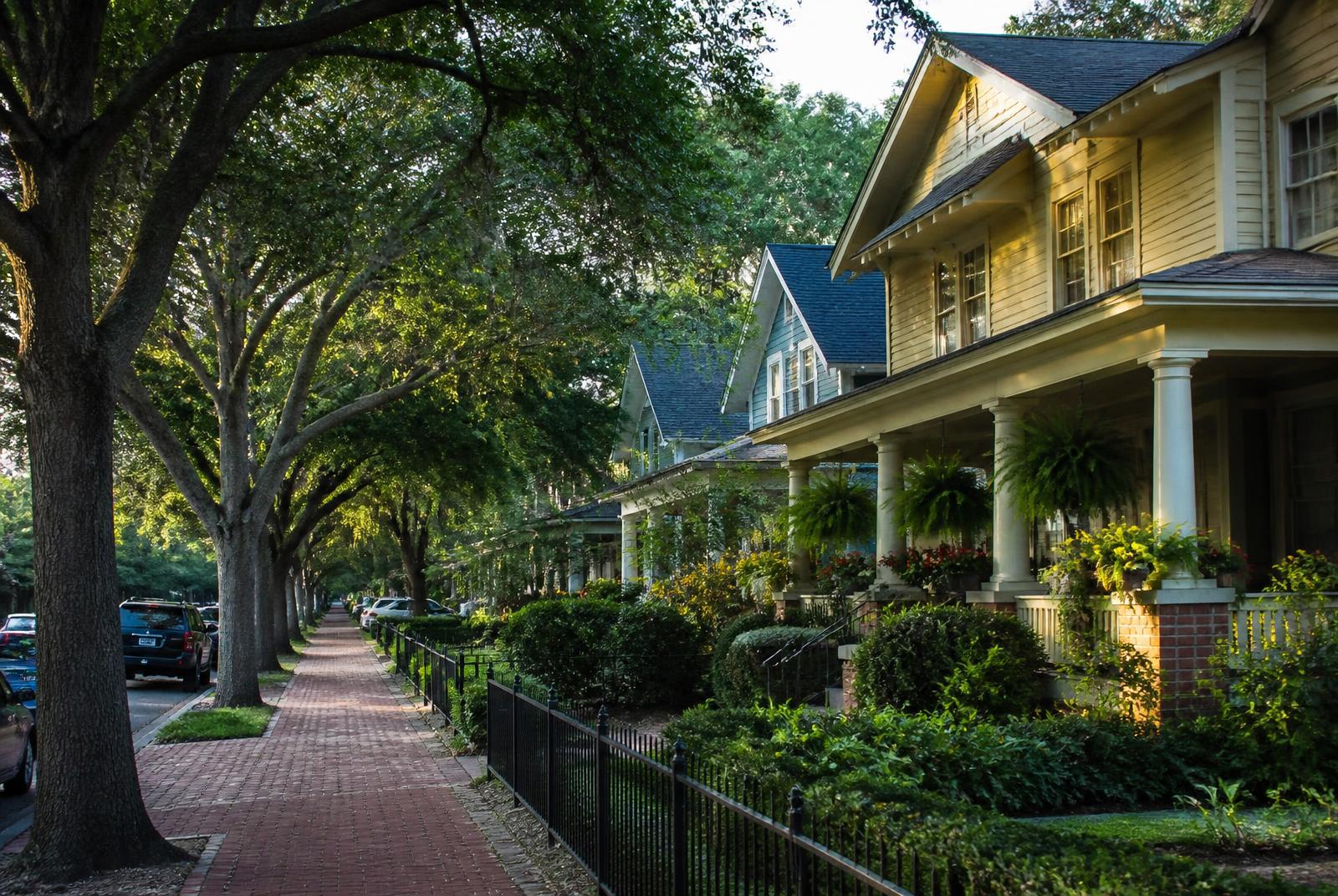
Tree-lined street of restored bungalows in a South End Charlotte neighborhood

Comparisons

South End vs. Charlotte's Other Close-In Neighborhoods

South End sits at the intersection of Uptown, Dilworth, and the neighborhoods along the Blue Line, each offering a distinct tradeoff between density, transit access, and housing type.

5 neighborhoods compared

Scope of this guide

Transit vs. detached housing

Core tradeoff

Condo-heavy vs. single-family-heavy

Stock composition split

Walkability-anchored

Shared thread

South End vs. Uptown

Uptown Charlotte is the region's primary commercial and high-rise residential core, with a housing stock skewing toward high-rise condo and apartment towers built for proximity to office employment and major event venues. South End, one Blue Line stop or a short walk south, offers a similar density of new construction but with a more residential, lower-key daily rhythm and a stronger concentration of breweries and independent restaurants rather than Uptown's office-and-arena orientation.

Price positioning between the two shifts over time, but South End has generally offered a comparable or somewhat more moderate entry point for new construction than the priciest Uptown towers, while still delivering Blue Line access to Uptown employment in a few minutes' ride. Buyers choosing between the two are often weighing walk-to-work convenience against a preference for South End's more neighborhood-scaled street life.

Renters and buyers who work Uptown but want evening and weekend life outside the office district often land in South End specifically for this reason — proximity without being immersed in the commercial core, and a closer look at the Uptown Charlotte neighborhood guide is the fastest way to test whether the office-district side of that tradeoff suits you.

South End vs. Dilworth

Dilworth, directly adjacent to South End, is one of Charlotte's classic streetcar-suburb neighborhoods, dominated by detached single-family homes on tree-lined streets dating largely to the early 20th century. This is the single biggest structural difference between the two: South End is condo-, loft-, and townhome-heavy, while Dilworth is single-family-dominant with far less multifamily new construction.

Price per square foot comparisons between the two aren't especially useful given how different the housing types are, but buyers often use the two neighborhoods as a lifestyle fork: Dilworth for a detached home with a yard and a quieter residential feel, South End for density, walkability to dining and breweries, and direct Blue Line access. Some buyers split the difference by choosing South End's townhome product, which offers more space than a condo while staying closer to South End's core.

School-age family buyers weighing CMS attendance zones should confirm current boundaries directly with Charlotte-Mecklenburg Schools, since assignment areas can shift and vary by address even within these adjacent neighborhoods.

South End vs. NoDa

NoDa, Charlotte's North Davidson arts district, shares some DNA with South End as another Blue Line neighborhood built around a mix of historic mill and industrial buildings and newer infill construction. The key difference is scale and pace: NoDa's redevelopment has generally moved at a smaller, more incremental scale than South End's, and its identity leans more heavily into a gallery-and-live-music arts scene than South End's brewery-and-dining orientation.

Housing stock in NoDa mixes smaller-scale apartment and condo development with a meaningful stock of older, smaller single-family and duplex homes, giving it a somewhat lower-density feel than South End's more tower-heavy core. Price points can be more accessible in NoDa for buyers priced out of South End's newest construction, though this gap has narrowed as both neighborhoods have seen continued development pressure.

Buyers drawn to South End for its walkability and transit access but wanting a slightly less dense, more eclectic neighborhood character are often good candidates to also consider NoDa in their search, and a dedicated NoDa neighborhood guide covers that district's streets and housing stock in the detail this comparison cannot.

South End vs. Plaza Midwood

Plaza Midwood sits east of Uptown along Central Avenue, outside the Blue Line corridor, with a housing stock dominated by early-to-mid-20th-century bungalows and a commercial strip known for independent restaurants and bars. Unlike South End, Plaza Midwood isn't organized around light rail, so residents there rely on car or bus commuting rather than the Blue Line access that defines South End's transportation identity.

This transit difference is the clearest dividing line for buyers choosing between the two: South End suits residents prioritizing car-light or car-free commuting to Uptown or the broader Blue Line corridor, while Plaza Midwood suits buyers comfortable with a car-dependent commute in exchange for a more established, detached-home-heavy residential character.

Both neighborhoods share a strong independent dining and nightlife identity, so buyers choosing between them are often making a transit-versus-housing-type tradeoff rather than a lifestyle-amenity tradeoff.

South End vs. Wesley Heights

Wesley Heights, just west of Uptown, is a smaller, historically significant neighborhood with a housing stock mixing restored early-20th-century homes with newer infill construction, and none of South End's high-rise or mill-loft condo density. It's a quieter, more residential counterpart to South End's much more commercially active and vertically developed footprint.

Access to Uptown is a shared advantage for both neighborhoods, though Wesley Heights relies more on proximity by car or bike than on Blue Line rail access, since the light rail corridor runs through South End rather than west of Uptown. This makes the two neighborhoods less directly comparable as substitutes than South End is with Dilworth or NoDa — they serve somewhat different buyer priorities.

Buyers specifically seeking a historic, walkable-to-Uptown neighborhood with detached housing and less density than South End's condo-heavy core may find Wesley Heights a useful comparison point, though direct transit access to the rest of the Blue Line corridor won't be part of the equation there.

How to actually decide

The clearest way to choose among these neighborhoods is to rank your own priorities explicitly: transit access, housing type (detached versus attached), density and walkability preference, and price point, in whatever order matters most to you. South End wins decisively on Blue Line transit access and density of dining and brewery options; Dilworth and Wesley Heights win on detached single-family character; NoDa offers a middle ground on density with strong transit access; Plaza Midwood offers established character without transit access.

It's worth touring each neighborhood at different times — a weekday morning commute hour and a weekend evening — since the daily rhythm of a dense, transit-oriented neighborhood like South End feels genuinely different from a quieter, single-family neighborhood like Dilworth or Wesley Heights, in ways that photos and listings don't fully convey.

A Canopy Realtor Association member working across all of these submarkets can help translate your stated priorities into a realistic shortlist, since the right neighborhood fit depends as much on daily lifestyle preferences as on the numbers alone.

At a glance

What matters most here

South End vs. Uptown

Similar new-construction density, but South End trades office-district energy for neighborhood-scaled dining and breweries.

South End vs. Dilworth

The starkest contrast in the group — condo and loft density versus classic detached streetcar-suburb homes.

South End vs. NoDa

Both are Blue Line arts-and-industrial neighborhoods, but NoDa has developed at a smaller, more incremental scale.

South End vs. Plaza Midwood & Wesley Heights

Both lack direct light rail access, making the tradeoff about transit versus established, detached-home character.

Orientation

Where this sits in South End

Everything in the district is measured against the Blue Line and the Rail Trail. Use the map to place the blocks referenced above.

N ↑Morehead StEast/West BlvdTremont AveUptown CharlotteCarson StationBland Street StationEast/West Blvd StationNew Bern StationCharlotte Rail TrailAtherton MillDesign DistrictBrewery RowWilmoreDilworthSedgefieldLoSoLowe's Tech Hub

Interactive map

Hover or tap a marker

The Blue Line runs the length of South End on a northeast–southwest diagonal, with the Rail Trail beside it. Nearly everything in the district is measured by how far it sits from that spine.

  • Blue Line station
  • Landmark
  • Sub-district
  • Employer / anchor

Answered

Questions & Answers

Is South End more expensive than Dilworth?

It depends heavily on housing type — comparing a South End condo to a Dilworth single-family home isn't a like-for-like comparison. Rather than a single price answer, compare per-square-foot figures within matching housing types, or work with a Canopy Realtor Association member to pull current comparables for your specific target home type.

Source: CEDIA — integrated home technology standards

Which is better for commuting to Uptown: South End or NoDa?

Both offer direct LYNX Blue Line access to Uptown, so commute times by rail are broadly similar depending on the specific station. The choice more often comes down to neighborhood character and housing stock preference than commute time alone.

Source: Charlotte Area Transit System — LYNX Blue Line

Does Plaza Midwood have light rail access like South End?

No — Plaza Midwood sits outside the Blue Line corridor and relies on car or bus transportation, unlike South End, which sits directly along the rail line. This is one of the clearest structural differences between the two neighborhoods.

Source: Charlotte Area Transit System — LYNX Blue Line

Is Wesley Heights walkable to Uptown like South End?

Wesley Heights sits close to Uptown and offers reasonable walking or biking access for some residents, but it doesn't have South End's light rail connection or its density of restaurants, breweries, and retail. It functions more as a quieter, historic residential neighborhood near Uptown.

Source: Charlotte Area Transit System — LYNX Blue Line

Which Charlotte neighborhood is most similar to South End?

NoDa is often considered the closest comparison, since both developed around historic industrial buildings and both sit along the LYNX Blue Line corridor. NoDa has generally developed at a smaller scale and carries a more arts-oriented identity than South End's brewery-and-dining focus.

Source: Charlotte Area Transit System — LYNX Blue Line

Should families with school-age children consider South End over Dilworth?

This depends heavily on housing type preference and CMS school assignment, which should be verified directly with Charlotte-Mecklenburg Schools for a specific address, since attendance zones can differ even between adjacent neighborhoods and change over time.

Source: Charlotte-Mecklenburg Schools school locator

Primary Sources

Figures are compiled from public records and primary sources and are reviewed periodically. Conditions in South End change quickly — verify anything you intend to rely on.