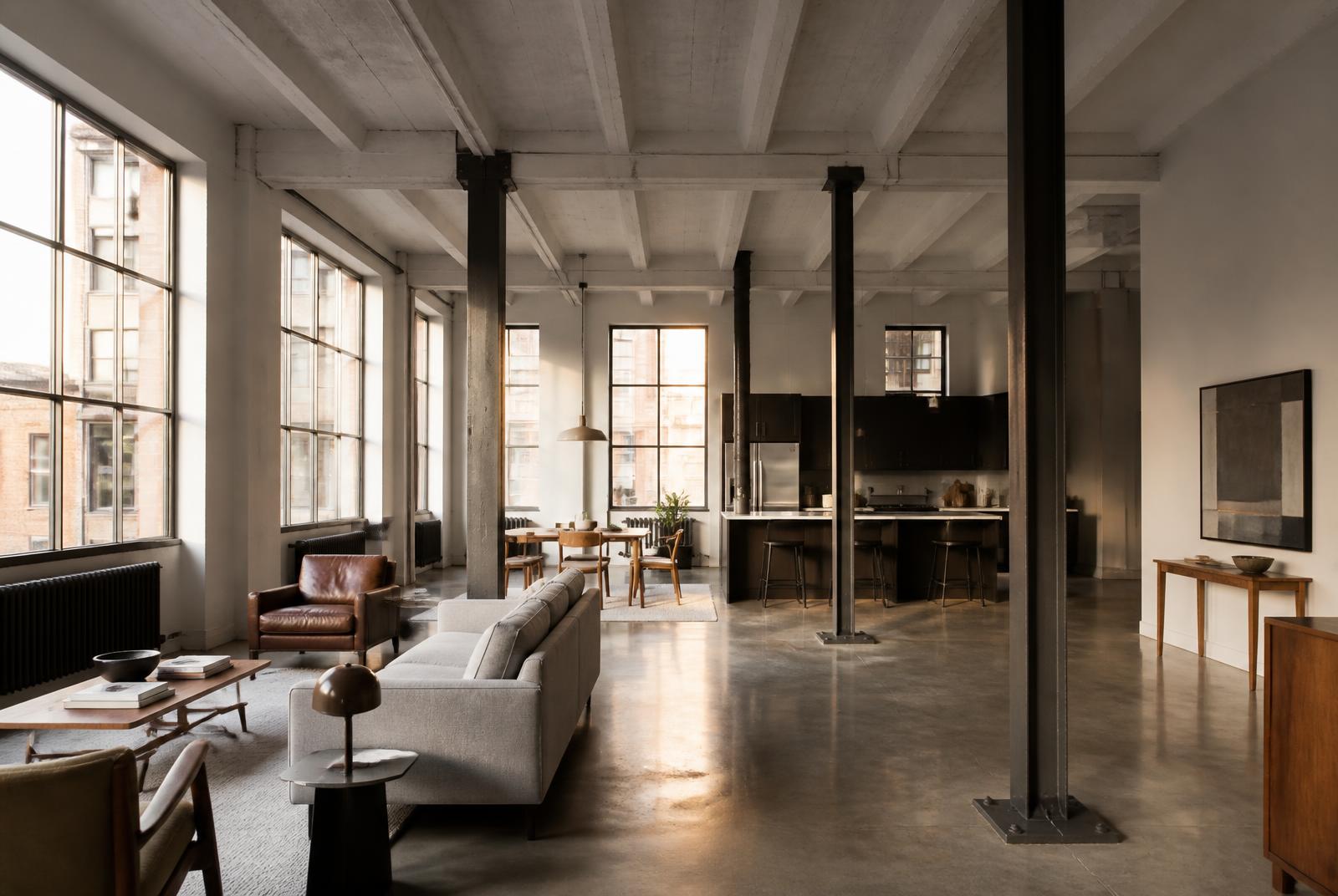
Converted warehouse loft living room with concrete floors and steel columns

Mill Conversions

South End Lofts: Living in Converted Mills

South End's loft stock traces back to the neighborhood's textile-mill history, with exposed brick and timber now housing some of the market's most distinctive units.

Late 1800s–early 1900s

Original construction era

Brick · Timber · Steel

Structural character

Fixed

Supply trajectory

Historic overlay eligible

Preservation status (verify)

Where South End's lofts come from

South End's identity as a neighborhood is inseparable from its industrial past. Textile mills and rail-adjacent warehouses built in the late 19th and early 20th centuries once anchored the local economy; many of those same structures now house residential lofts, having been converted starting in the late 1990s and 2000s as the neighborhood's arts and industrial-chic identity took hold.

This history is why the term 'loft' in South End usually refers to something structurally specific — a unit within a converted industrial building — rather than a marketing term for any open-concept apartment. Buyers should distinguish true mill conversions from newer buildings simply styled to look industrial, since the underlying structure, materials, and maintenance considerations differ substantially.

The Historic South End district designation and related preservation guidance may apply to some of these buildings, which is worth verifying if you're considering exterior modifications or additions to a unit within one.

Structural and material characteristics

Original mill construction typically features heavy timber or steel columns, exposed brick exterior and sometimes interior walls, and tall ceiling heights relative to typical residential construction of any era. These features are the primary draw for loft buyers, but they come with practical considerations: exposed brick requires different moisture management than drywall, and original windows, where retained, may have different insulation performance than modern equivalents.

Retrofit systems — plumbing, electrical, and HVAC — are almost always newer than the building shell itself, added during the conversion process. The age and quality of this retrofit work varies by building and by how many renovation cycles a specific unit has been through since conversion, so it's worth asking directly rather than assuming based on the building's overall reputation.

Floor plans in mill conversions often reflect the original structural grid rather than optimized residential design, which can mean irregular layouts, exposed columns within living space, or windows placed for the building's original industrial function rather than ideal residential daylight.

  • Exposed brick, timber, or steel structural elements
  • Retrofit HVAC, plumbing, and electrical systems
  • Original or replacement windows — verify age and performance
  • Irregular floor plans reflecting original industrial grid

Financing and inspection considerations

Financing a loft unit generally follows the same condominium lending rules as any other South End condo, subject to the same warrantability considerations around occupancy ratio and litigation status. Some smaller loft buildings, particularly those with fewer total units, can present additional lender scrutiny simply due to the smaller pool of comparable sales available for appraisal purposes.

Inspections of loft units should pay particular attention to how well the original structure has been maintained and how the retrofit systems interact with it — moisture intrusion around exposed masonry, HVAC performance in spaces with high ceilings and less insulation than modern construction, and the condition of any original windows that were retained rather than replaced.

Buyers should also ask about the building's fire suppression and life-safety systems, since converting an industrial structure to residential use requires meeting current code, and it's worth confirming this work was properly permitted and inspected through Charlotte-Mecklenburg permit records at the time of conversion.

HOA structures in converted buildings

Loft buildings are governed by the same type of condominium association structure as other South End condos, but reserve planning can look different given the building's age and unique structural elements. Reserve studies for these buildings should specifically address masonry maintenance, structural steel or timber inspection, and any building-specific systems tied to the historic structure.

Because loft buildings are often smaller than the newest towers, per-unit HOA dues can run higher for comparable amenity levels simply due to fewer units sharing fixed costs like insurance and structural maintenance. This is worth factoring into affordability calculations rather than comparing dues directly against larger, newer buildings.

Ask specifically whether the association has an approved plan and funding source for major structural maintenance items unique to the building's industrial origins, since these can be significant and infrequent expenses.

Value and resale character

Because loft supply in South End is fixed — no new mill buildings are being converted at meaningful scale — this segment tends to hold a distinct value proposition tied to scarcity and character rather than to amenity competition with new towers. Buyers specifically seeking this character are often willing to accept tradeoffs in layout efficiency or parking convenience that they wouldn't accept in standard condo product.

Resale pace for lofts can vary more than for standardized condo product, since the buyer pool is narrower and more particular about specific structural and character features. A well-maintained unit with strong original character in a well-run building tends to resell steadily; a poorly maintained unit in a building with deferred structural maintenance can sit significantly longer.

Comparable sales analysis for lofts should be restricted to other converted industrial buildings rather than the broader condo market, since price per square foot dynamics differ meaningfully between the two categories.

Who buys lofts in South End

Loft buyers tend to prioritize character and architectural distinctiveness over efficiency or the newest amenities, often working in creative or design-adjacent fields, or simply drawn to the aesthetic and history the units offer. This buyer profile differs somewhat from the broader South End condo buyer pool, which skews more toward convenience and low-maintenance living.

Investors do purchase lofts for rental purposes, but should factor in the potentially higher maintenance costs associated with older structural systems, and confirm the specific building's rental policy before assuming a straightforward buy-and-lease strategy.

Buyers considering a loft purchase should visit at different times of day and in different weather conditions if possible, since exposed masonry buildings can behave differently in heat, humidity, and heavy rain than standard drywall construction.

At a glance

What matters most here

Fixed, non-replicable supply

No new mill conversions are coming online at scale, which supports the segment's scarcity value.

Retrofit systems, original shell

Plumbing, electrical, and HVAC are almost always newer additions layered into original industrial structure.

Smaller buildings, higher per-unit costs

Fewer units sharing fixed structural and insurance costs can mean higher HOA dues relative to size.

Narrower resale pool

Comparable sales should be restricted to other converted buildings, not the broader condo market.

Answered

Questions & Answers

What makes a South End unit a 'loft' versus a regular condo?

In South End, a loft typically refers to a unit within a converted historic industrial building — a former mill or warehouse — featuring exposed original structural elements like brick, timber, or steel. Newer buildings styled to look industrial are not true conversions and should be evaluated as standard condo product instead.

Source: Charlotte-Mecklenburg Historic Landmarks Commission

Are South End mill lofts more expensive than regular condos?

Pricing depends on the specific building and unit, but loft conversions often carry a character premium tied to their scarcity and distinctive features. Compare price per square foot against other converted buildings rather than the broader condo market for a more accurate read.

Source: Charlotte-Mecklenburg Historic Landmarks Commission

Is it harder to get a mortgage for a loft in South End?

The same condominium warrantability rules apply as with any South End condo, but smaller loft buildings can sometimes face additional lender scrutiny due to a limited pool of comparable sales. Ask your lender early whether the specific building has any known financing complications.

Source: Charlotte-Mecklenburg Historic Landmarks Commission

What should I check before buying a mill conversion?

Request the reserve study with specific attention to structural maintenance plans for masonry, timber, or steel elements, ask about the age of retrofit HVAC and plumbing systems, and confirm any historic district or preservation guidance that might apply to the specific building.

Source: Charlotte-Mecklenburg Historic Landmarks Commission

Do South End lofts have HOA fees?

Yes, loft units are almost always part of a condominium association, and per-unit dues can run higher than in larger buildings since fixed costs are spread across fewer units. Review the specific budget and reserve plan for the building in question.

Source: NC Secretary of State — HOA and business registration search

Can I renovate a loft unit's exposed brick or structure?

Any modification to shared structural elements typically requires association approval, and buildings within a historic overlay may have additional restrictions. Verify both the HOA's architectural guidelines and any applicable historic preservation rules before planning renovations.

Source: NC Secretary of State — HOA and business registration search

Primary Sources

Figures are compiled from public records and primary sources and are reviewed periodically. Conditions in South End change quickly — verify anything you intend to rely on.