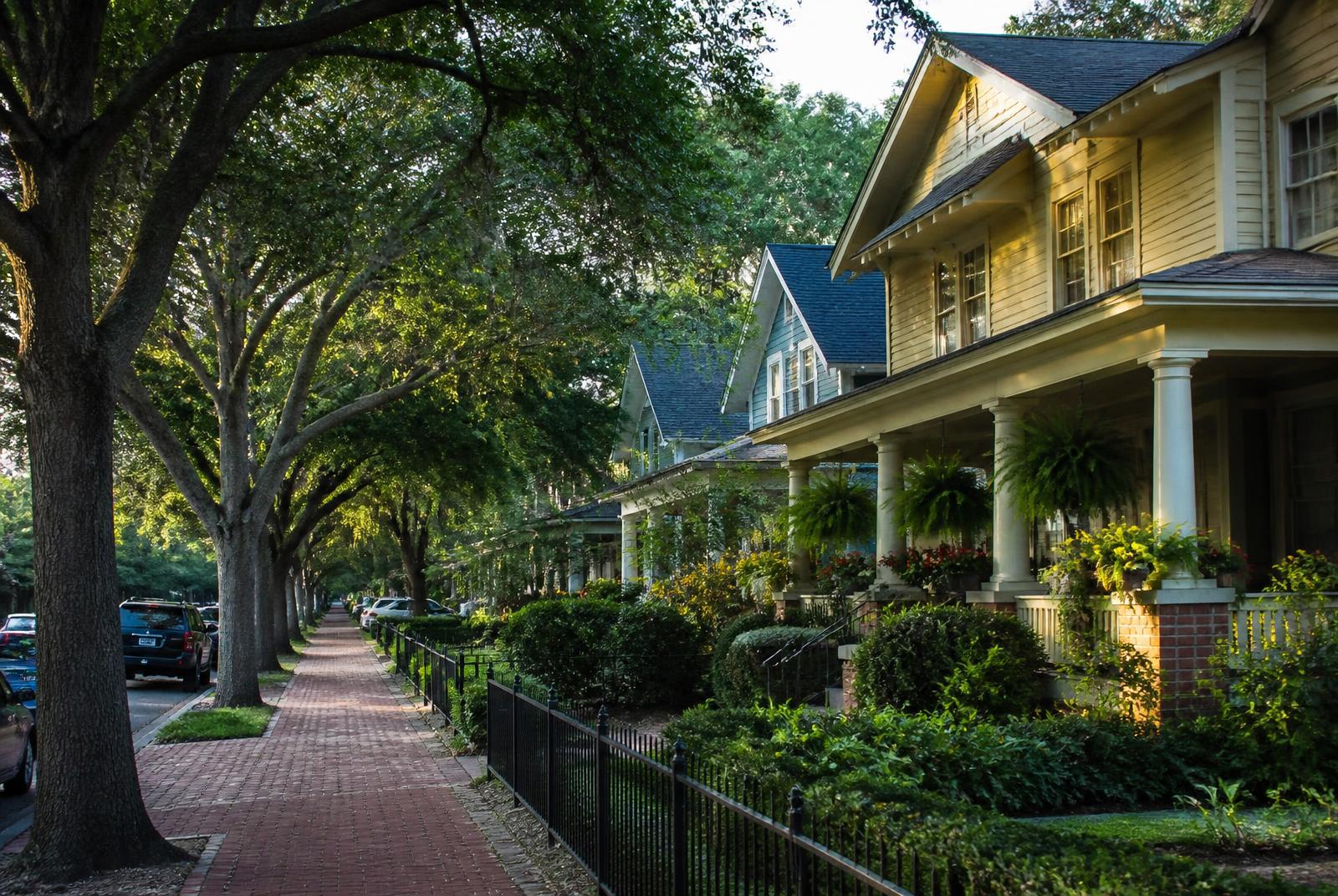
Tree-lined street of restored bungalows in a South End Charlotte neighborhood

Comparison

South End vs Dilworth: Two Neighborhoods, One Border

South End and Dilworth share a boundary and almost nothing else structurally. One densified along a rail line; the other is a preserved streetcar suburb of bungalows and mature trees.

Attached vs detached

Dominant housing

Rail corridor vs streetcar grid

Street pattern

Blue Line vs bus + car

Primary transit

Mills vs bungalows

Signature architecture

Where each neighborhood actually is

South End runs southwest from the edge of Uptown along the former Southern Railway corridor that now carries the LYNX Blue Line and the Charlotte Rail Trail. Dilworth sits immediately east of that corridor, organized around East and South Boulevard and the tree-lined residential streets between them, extending toward Freedom Park and the Little Sugar Creek Greenway.

The two touch along South Boulevard and the rail line, which is why listings and casual conversation blur them. They are separately identified neighborhoods with different histories, different zoning pressure, and different housing. A block-by-block reading matters here more than in most Charlotte comparisons, because crossing one street can move you between two entirely different living patterns.

  • South End: rail-corridor district, mostly 28203
  • Dilworth: streetcar suburb east of the corridor
  • Shared edge: South Boulevard and the Blue Line right-of-way

Housing stock and architecture

Dilworth is Charlotte's first streetcar suburb, and it still reads that way: detached houses on individual lots, bungalow and revival architecture, porches, sidewalks, and canopy trees. Renovation and teardown-rebuild activity has changed individual blocks, but the underlying pattern of single-family lots remains intact and is protected in places by historic-district review.

South End's stock is overwhelmingly attached. Adaptive-reuse mill lofts occupy the oldest layer, followed by early-2000s conversions and mid-rise condominiums, then the current generation of apartment and condominium buildings shaped by transit-oriented zoning. Townhomes fill the seams. If you want a yard, a driveway, and a detached house, Dilworth is the neighborhood that has them; South End largely does not.

  • Dilworth: bungalows, revivals, infill houses, some townhomes
  • South End: mill lofts, condos, mid- and high-rise apartments, townhomes
  • Historic review applies in parts of Dilworth, not in the South End corridor

Getting around: rail versus street grid

South End was rebuilt around the Blue Line. Multiple light-rail stations serve the district, the Rail Trail links them on foot and by bike, and a large share of residents can reach a station, a grocery run, and a restaurant without moving a car. Density and parking pressure are the cost of that access.

Dilworth is walkable in a different, quieter way — sidewalks and short blocks make errands on foot pleasant, and the East Boulevard corridor concentrates shops and restaurants — but most trips still involve a car, and rail access means walking or driving to a South End station. Bus routes serve the main corridors, and the greenway network is a genuine asset for recreation rather than commuting.

  • South End: light rail plus the Rail Trail spine
  • Dilworth: sidewalk grid, East Boulevard retail, greenway access
  • Parking is scarcer and more managed in South End

Eating, drinking, and evening noise

South End holds one of the densest concentrations of restaurants, breweries, and taprooms in Charlotte, most of it clustered within a few blocks of the Rail Trail. That is the neighborhood's biggest draw and its biggest tradeoff: on weekend evenings the core blocks are loud, crowded, and busy with rideshare traffic well past midnight.

Dilworth's dining is smaller in scale and more neighborhood-facing, concentrated along East Boulevard and a handful of side-street corners, with an earlier close and a quieter street after dinner. People who want to walk to a taproom every night choose South End; people who want the option of a nice dinner and a silent street at eleven choose Dilworth.

Buying, renting, and the ownership mix

Dilworth is primarily an ownership neighborhood, with detached houses that trade as single-family real estate and appraise against other detached houses. Value drivers are lot, condition, renovation quality, and proximity to East Boulevard and the parks. Inventory is finite, because no one is building new streets of bungalows.

South End's mix leans heavily rental, with an ownership layer of condominiums and lofts inside it. That changes how you evaluate a purchase: association budgets, reserves, rental caps, warrantability, and building construction type matter as much as the unit itself. Comparable sales should be filtered by building era and construction type rather than by neighborhood average.

  • Dilworth: detached-house comparables, lot and condition driven
  • South End: association documents, reserves, and warrantability drive value
  • Verify current assessment data with the Mecklenburg County assessor

Who each one suits

Choose South End if car-optional living, transit access, and immediate walk-out dining and nightlife matter more than square footage and quiet. Choose Dilworth if you want a detached house, a yard, mature trees, and a calmer street, and you accept a short drive or walk to reach rail and the densest restaurant blocks.

Plenty of people tour both and end up somewhere in the middle — a townhome at the seam, or a South End building set a few blocks back from the busiest stretch of the trail. Walking the specific block at 8pm on a Friday tells you more than any comparison page can.

At a glance

What matters most here

Different housing entirely

Detached bungalows in Dilworth; attached lofts, condos, and apartments in South End.

Rail versus road

South End is organized around light rail; Dilworth around a streetcar-era street grid.

Noise is the tradeoff

South End's nightlife density is the reason to move there and the reason some people leave.

Not the same neighborhood

They share a border along South Boulevard but are separately identified areas with different rules.

Orientation

Where this sits in South End

Everything in the district is measured against the Blue Line and the Rail Trail. Use the map to place the blocks referenced above.

N ↑Morehead StEast/West BlvdTremont AveUptown CharlotteCarson StationBland Street StationEast/West Blvd StationNew Bern StationCharlotte Rail TrailAtherton MillDesign DistrictBrewery RowWilmoreDilworthSedgefieldLoSoLowe's Tech Hub

Interactive map

Hover or tap a marker

The Blue Line runs the length of South End on a northeast–southwest diagonal, with the Rail Trail beside it. Nearly everything in the district is measured by how far it sits from that spine.

  • Blue Line station
  • Landmark
  • Sub-district
  • Employer / anchor

Answered

Questions & Answers

Is South End part of Dilworth?

No. They are adjacent but separately identified Charlotte neighborhoods. South End follows the rail corridor southwest of Uptown; Dilworth sits east of that corridor around East and South Boulevard.

Source: City of Charlotte

Which is more walkable, South End or Dilworth?

South End is more walkable for daily errands, dining, and transit because density and the Rail Trail concentrate destinations. Dilworth is pleasant to walk but most trips still involve a car.

Source: Charlotte Area Transit System — LYNX Blue Line

Which has better housing for families wanting a yard?

Dilworth. Its stock is predominantly detached single-family houses on individual lots. South End is overwhelmingly attached housing with little private yard space.

Source: City of Charlotte

Is Dilworth quieter than South End?

Generally yes, especially at night. South End's core blocks near the Rail Trail carry restaurant, brewery, and rideshare activity late into the weekend; Dilworth's residential streets do not.

Source: Charlotte Rail Trail — Charlotte Center City Partners

Do both neighborhoods have light rail access?

The LYNX Blue Line runs through South End. Dilworth residents typically walk or drive a short distance to a South End station rather than having stations inside the neighborhood.

Source: Charlotte Area Transit System — LYNX Blue Line

Which is the better investment?

They are different asset classes rather than better or worse. Dilworth trades as detached single-family real estate; South End purchases are usually condominiums where association health, reserves, and warrantability drive resale.

Source: City of Charlotte

Primary Sources

Figures are compiled from public records and primary sources and are reviewed periodically. Conditions in South End change quickly — verify anything you intend to rely on.